


Struggling to show the true quality behind your perfume? Polished photos look great, but they don't tell a story. Revealing the manufacturing process can captivate customers and build real trust.
The perfume bottle manufacturing process starts with melting high-purity raw materials1 like silica sand at over 1500°C. The molten glass2 is then precisely shaped in a mold, cooled slowly in an annealing oven3 to ensure strength, and finally decorated with various finishing techniques to create the final product.

I've learned that showing the "how" is just as important as showing the "what." A client of mine recently visited our factory and filmed our production line. They posted these raw, behind-the-scenes videos on their social media, and the customer response was incredible. It drove sales because people saw the craftsmanship and quality that went into each bottle. It’s a story that a perfect product photo just can’t tell. This journey from raw material to a work of art is what truly connects with people, and I want to walk you through it.
What Are the First Steps in Creating a Custom Bottle?
Have a unique brand vision but are stuck with generic stock bottles? Off-the-shelf options can make your luxury product look common. Our custom design and mold process brings your exclusive vision to life.
The first step is translating your idea into a technical design. This begins with your concept or sketch, which we develop into a 3D model4. Once you approve the model, we create a high-precision metal mold, which is the tool that will shape every single one of your bottles.

Everything starts with your idea. You might come to us with a simple sketch, an inspiration photo, or just a feeling you want your brand to evoke. Our job is to turn that into a manufacturable product.
From Concept to 3D Model
First, our design team works with you to create detailed product drawings and a realistic 3D model4. This lets you see and refine the bottle's shape, weight, and dimensions before we make anything physical. We can make adjustments to the shoulder curve, the base thickness, or the neck finish until it's perfect. This digital step saves time and ensures the final product matches your vision exactly.
Crafting the Physical Mold
Once you approve the 3D model4, our CNC machining5 center gets to work. We craft the production molds from high-strength metal. This is a critical stage where precision is everything.
| Mold Creation Stage | Description |
|---|---|
| CNC Machining | A computer-controlled machine carves the mold. |
| Laser Engraving | Adds fine details or logos inside the mold. |
| Hand Polishing | Ensures a perfectly smooth glass surface. |
| Final Assembly | The different parts of the mold are fitted. |
This process guarantees that every bottle we produce for you is identical and flawless. We also sign non-disclosure agreements to protect your unique design, so your signature bottle remains yours alone.
How Does Molten Glass Become a Perfect Bottle?
Worried about imperfections like bubbles or uneven walls in your glass? Poor quality glass can cheapen your product's feel and even cause leaks. Our process uses premium materials6 and automated machinery for flawless results.
We melt high-purity crystal white glass at extreme temperatures. A precise "gob" of this molten glass2 is then fed into the mold. Compressed air shapes it into a bottle, which then moves to an annealing oven3 for slow, controlled cooling to build strength and prevent cracking.
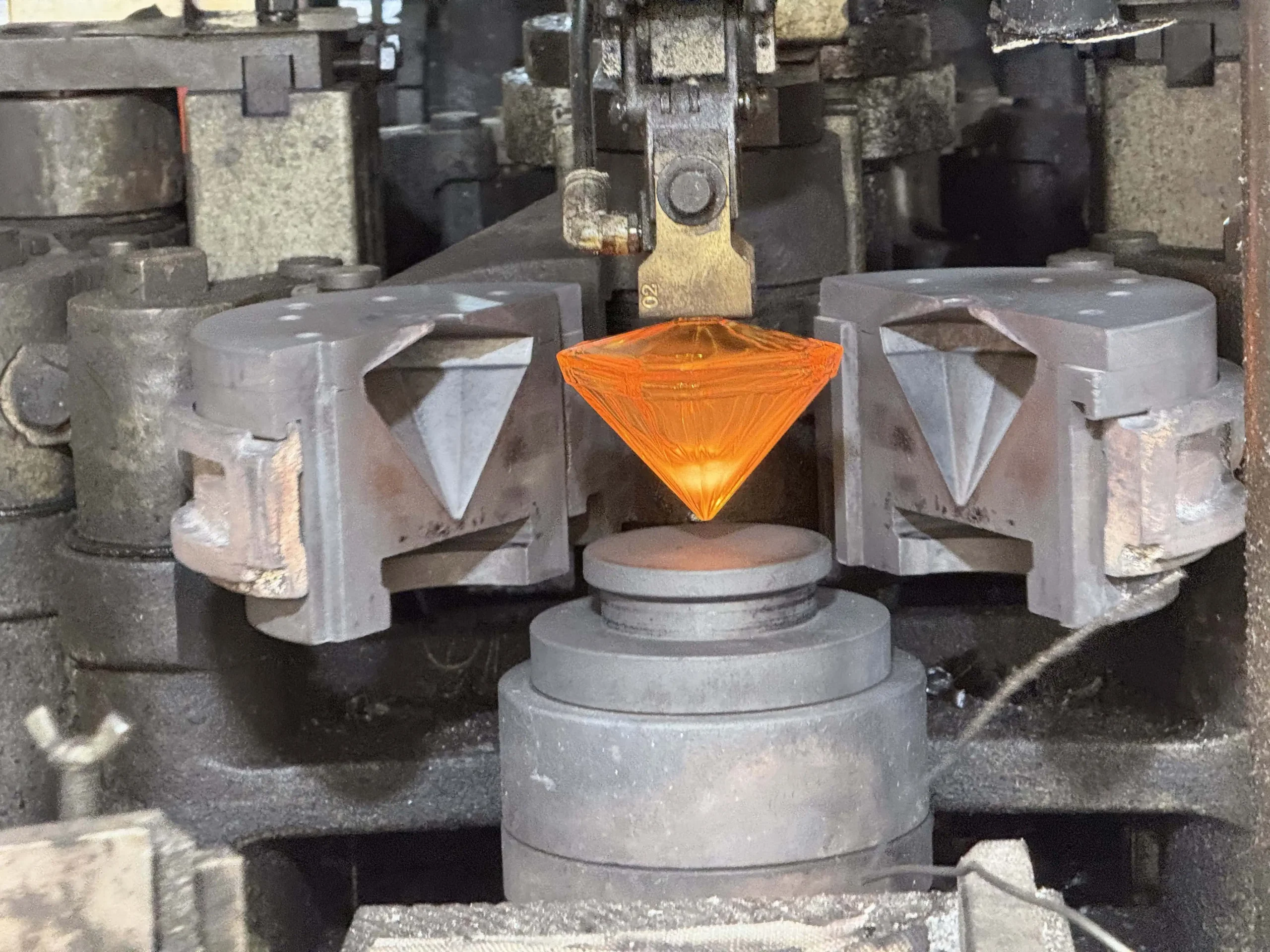
This is where the magic really happens. The transformation from a formless, glowing liquid to a crystal-clear bottle is a process of heat, pressure, and precision. We don't use ordinary glass; we focus on high-white and crystal-white materials. These are purer, clearer, and have a substantial, heavy feel that signals luxury to your customer the moment they touch it.
Melting and Forming
Our automated production line starts at the furnace, where raw materials are melted into a perfectly uniform liquid. An automatic feeder then cuts a "gob" of molten glass2 at the exact weight needed for your bottle. This gob is dropped into the forming machine, where a preliminary mold creates the basic shape and neck finish. Then, it's transferred to the final mold, where compressed air blows it into its final form.
Annealing and Quality Control
The newly formed bottle is still extremely hot. If it cools too quickly, stress will build up in the glass, making it fragile. To prevent this, every bottle travels through a long tunnel oven called an annealing lehr. This oven slowly and evenly reduces the temperature over several hours, making the glass strong and durable. After annealing, each bottle undergoes a strict quality inspection7 for cosmetic flaws, correct dimensions, and a perfect seal.
| Material Type | Transparency | Feel | Best For |
|---|---|---|---|
| Crystal White | Highest | Heavy, dense | Ultra-premium perfumes and cosmetics. |
| High White | Excellent | Substantial | Premium fragrance and skincare lines. |
| Standard Glass | Good | Lighter | Not used by us for premium packaging. |
What Finishing Touches Make a Bottle Unique?
A plain glass bottle doesn't reflect your brand's unique identity. With so many products on the shelf, yours needs to stand out. We offer a full suite of surface treatments8 to create a truly bespoke bottle.
After a bottle is formed and cooled, it moves to our finishing department. Here, we can apply a huge range of decorative processes9 like color spraying, silk-screen printing10, hot-stamping11 for metallic logos, frosting, or electroplating12 to match your brand’s aesthetic and create a premium finish.
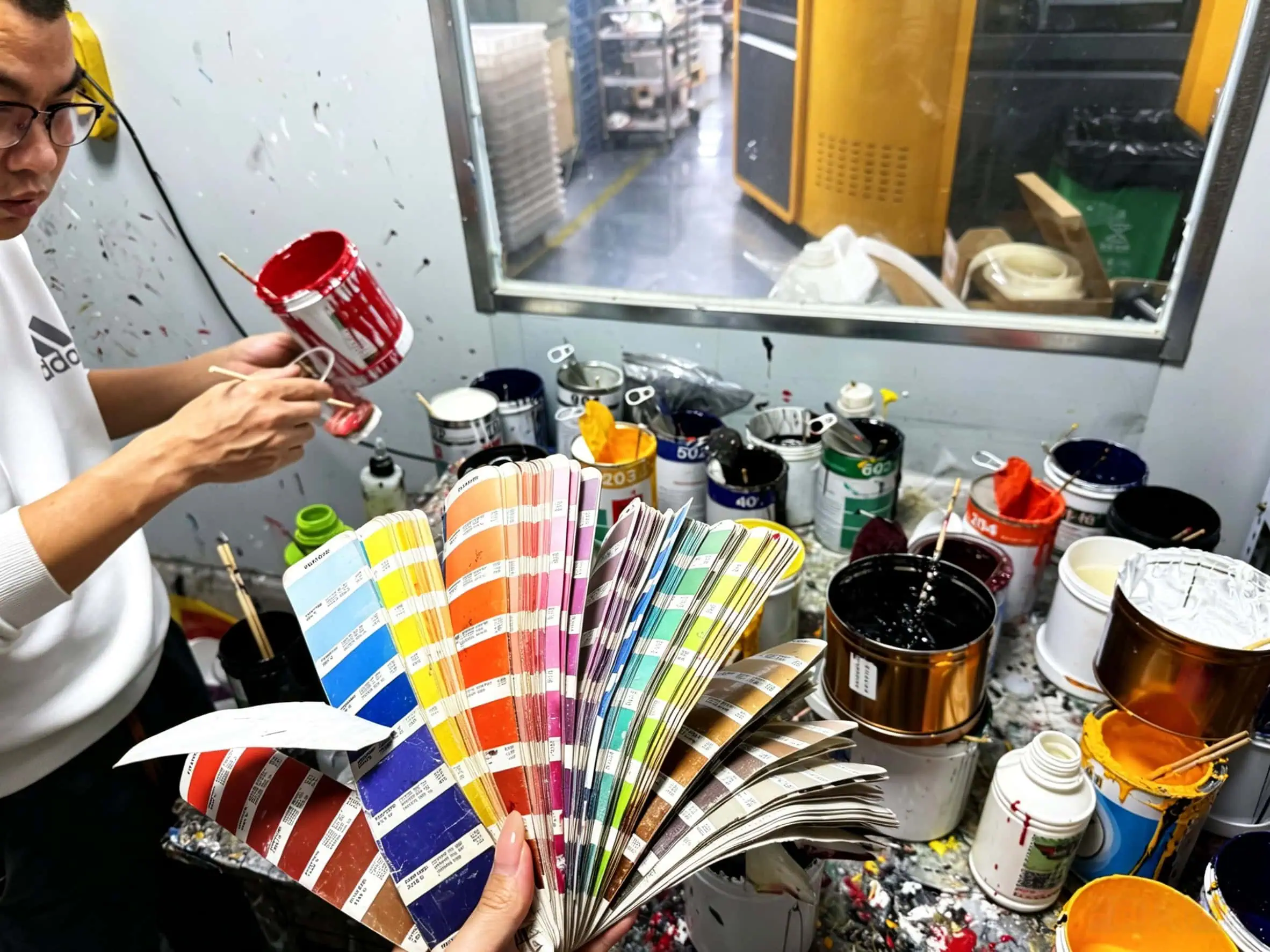
The bottle's shape is its body, but the finish is its personality. This is where we help you tell your brand's story visually. As a one-stop-shop, we handle all these processes in-house, which gives us total control over the quality and ensures a consistent look across your entire order. You don't have to waste time coordinating with multiple suppliers for decoration and accessories. We manage everything, from the bottle to the cap and sprayer. This includes sourcing or manufacturing matching caps in metal, wood, acrylic, or plastic, ensuring a perfect fit and a cohesive final product. Our goal is to deliver a shelf-ready package that looks and feels exceptional.
| Finishing Technique | Best For |
|---|---|
| Color Spraying | Opaque, transparent, or gradient colors. |
| Silk-Screen Print | Crisp logos and text in one or more colors. |
| Hot Stamping | Shiny metallic foil logos (gold, silver). |
| Frosting | A soft, matte, and elegant texture. |
| Electroplating | A full, shiny metallic coating. |
| Laser Engraving | Precise, sharp details etched into the glass. |
These are just a few of the options. We can combine techniques to create a truly unique look that makes your product impossible to ignore on the shelf.
Conclusion
The journey from molten glass2 to a luxury bottle is a blend of art and science. Showing this process reveals the true quality and craftsmanship that customers increasingly value.
Learn about the essential materials that ensure the quality and durability of glass products. ↩
Discover the fascinating transformation of molten glass into beautifully shaped bottles. ↩
Find out how annealing ovens strengthen glass bottles and prevent cracking. ↩
See how 3D modeling helps visualize and refine bottle designs before production. ↩
Understand how CNC machining enhances precision in creating molds for glass bottles. ↩
Learn about the high-quality materials that elevate the luxury feel of bottles. ↩
Learn about the rigorous quality checks that ensure flawless glass bottles. ↩
Explore the various surface treatments that make bottles unique and appealing. ↩
Explore various finishing techniques that enhance the aesthetic appeal of bottles. ↩
Discover the process of applying crisp logos and designs to glass surfaces. ↩
Learn how hot-stamping adds shiny metallic logos to enhance brand visibility. ↩
Understand how electroplating creates a luxurious metallic finish on bottles. ↩
Leave a Reply